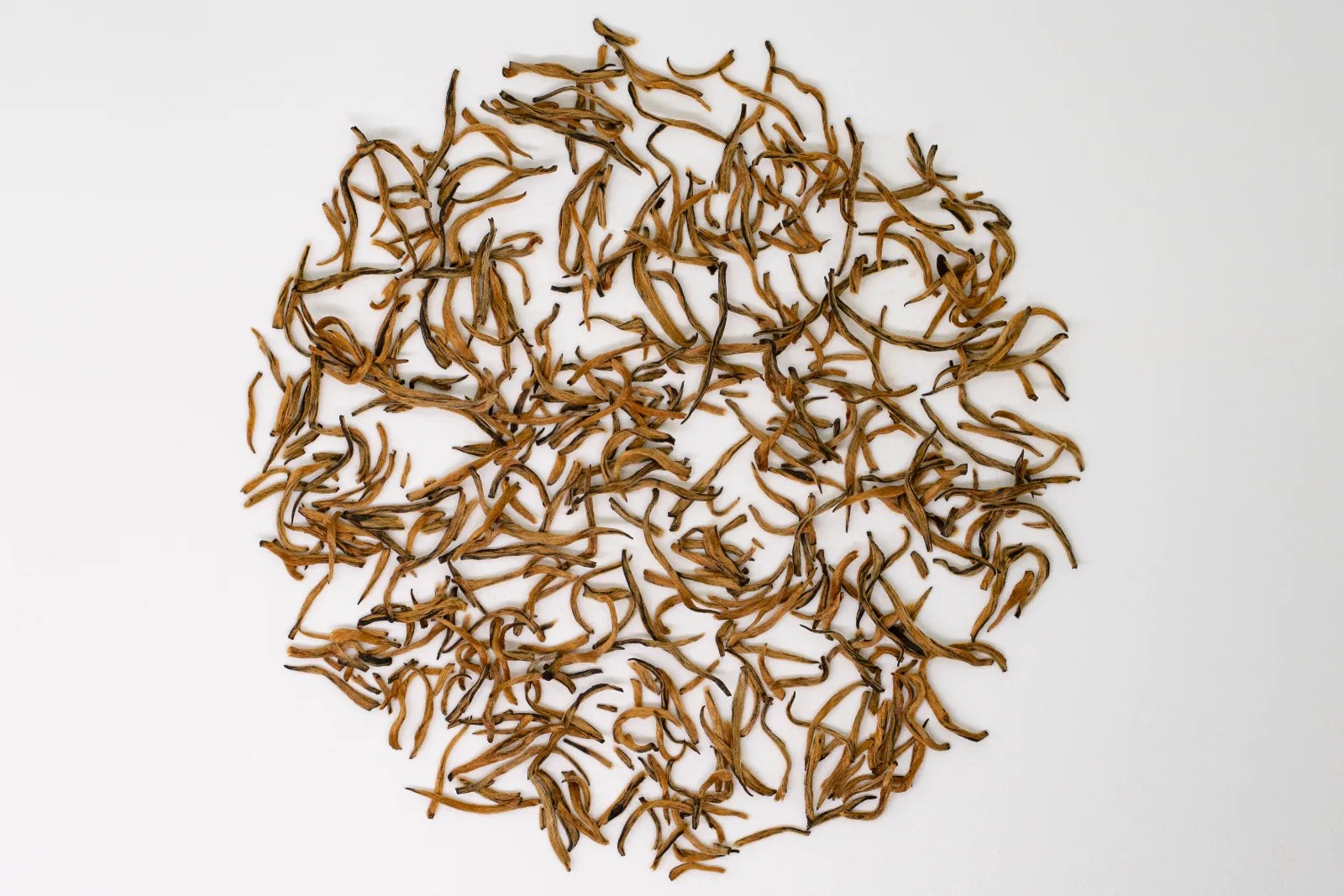
Hóng Lóngzhū红龙珠
hóng lóngzhū
- Origin
- Traditionally and most qualitatively produced in Yúnnán Province (云南,...
- Tea type
- Gaiwan
- Water temperature
- 90 °C
- Gongfu water temperature
- 93 °C
Provenance and specifications
- Origin
- Traditionally and most qualitatively produced in Yúnnán Province (云南, Yúnnán), China — primarily in the regions of Líncāng (临沧, Líncāng), Xīshuāngbǎnnà (西双版纳, Xīshuāngbǎnnà), Pu'er (普洱, Pǔ'ěr), Déhóng (德宏, Déhóng)
- Tea type
- Gaiwan
- SKU
- HONG-LONGZHU-CN
Brewing recipes
- Gongfu: 93°C, 5 g / 100 ml, 10s, 4 steeps
- Western: 88°C, 3 g / 200 ml, 180s, 2 steeps
Brewing, origin and taste notes
Brewing
- Tea amount
- 1 pearl (5–8 g) per 150–200 ml water. This is one of the format's main conveniences: precise dosing without scales.
- Water temperature
- 90 °C
- Gongfu water temperature
- 93 °C
- Tea amount
- 5 g
- Gongfu water volume
- 100 ml
- Tea-to-water ratio
- 10 s
Origin
- Tea type
- Red
- Climate
- Yunnan — subtropical/tropical mountain with alternating wet and dry seasons, average annual temperature 15–20 °C. Fujian — subtropical monsoon, more humid, average annual t...
Taste
- Liquor Color
- From amber-red to deep red-brown, transparent, clear, with characteristic golden rim (金圈, jīn quān) at cup edge. Color intensity depends on raw material and fermentation degree.
- Sensory Source Descriptor Be Intensity
- 2
- Sensory Source Descriptor Ch Intensity
- 3
- Sensory Source Descriptor H Intensity
- 3
- Sensory Source Descriptor L Intensity
- 3
- Sensory Source Descriptor Rb Intensity
- 4
Details
- Cultivar
- Depends on production region:
- Picking
- Main season — spring (March–April). Summer and autumn harvests are also used, but spring is valued significantly higher.
- Pluck Standard
- For high-quality Hong Longzhu — bud + 1–2 young leaves. For mass production, more mature leaves (2–4 leaves) are acceptable. The more tender the raw material, the smaller the pe...
- Raw Material
- For elite Hong Longzhu — fresh, undamaged, uniform shoots with high tip content. Pearl size is usually 5–8 g — this strictly determines the amount of leaf needed.
- Alkaloids
- Caffeine (咖啡碱) — 3.5–5.0%, theobromine, theophylline. Yunnan large-leaf tea typically contains somewhat more caffeine than small-leaf.
- Amino Acids
- 2–4%, including L-theanine. Provide sweet aftertaste and mild calming effect.
Questions & answers
No published questions and answers yet.
Customer reviews
No reviews yet. Be the first to share your experience.
Write a review
Sign in to check whether this purchase is eligible for a review.
Buy this tea
Verified sellers and regional availability are resolved from the commerce network before any external seller page opens.
Seller trust: Only verified commerce-network records are shown; retailer identity, terms and freshness remain visible before you follow a route.
Verified offers are being prepared
Region coverage: Traditionally and most qualitatively produced in Yúnnán Province (云南, Yúnnán), China — primarily in the regions of Líncāng (临沧, Líncāng), Xīshuāngbǎnnà (西双版纳, Xīshuāngbǎnnà), Pu'er (普洱, Pǔ'ěr), Déhóng (德宏, Déhóng)
No verified public offer is available for this product yet. Add the tea to your request or check again after the retailer network sync.
Open the shop