Skip to content
XNATA Tea Wiki
Menu
Chinese tea archive · dossiers, ratings and brewing research
Gaiwan

Guǎngxī Xuě Yá广西雪芽

Guǎngxī xuě yá

Origin
China, Guǎngxī Zhuāng Autonomous Region (广西壮族自治区, Guǎngxī Zhuàngzú Zì...
Tea type
Snow Bud Green Tea
Water temperature
65 °C
Gongfu water temperature
75 °C
SKU · GUANGXI-XUE-YA-CN
Encyclopedia dossier

Provenance, character and identification

Origin
China, Guǎngxī Zhuāng Autonomous Region (广西壮族自治区, Guǎngxī Zhuàngzú Zìzhìqū), Bǎisè region (百色, Bǎisè)
Tea type
Gaiwan
SKU
GUANGXI-XUE-YA-CN

Brewing recipes

  • Gongfu: 75°C, 5 g / 100 ml, 10s, 3 steeps
  • Western: 70°C, 3 g / 200 ml, 180s, 2 steeps
Tea dossier

Brewing, origin and taste notes

Brewing
Tea amount
3–4 g per 150 ml (gaiwan); or 1 g per 50 ml (for more concentrated tasting).
Teaware
Porcelain gàiwǎn (盖碗, gàiwǎn) or Yíxīng clay teapot (紫砂壶, zǐshā hú) — for optimal heat retention. Glass teaware — for visual enjoyment of silvery buds in cle...
Water temperature
65 °C
Gongfu water temperature
75 °C
Tea amount
5 g
Gongfu water volume
100 ml
Origin
Tea type
Green
Soil
Red-yellow ferrallitic soils (红黄壤, hónghuáng rǎng), rich in organic matter; good drainage on mountain slopes.
Taste
Dry Leaf Appearance
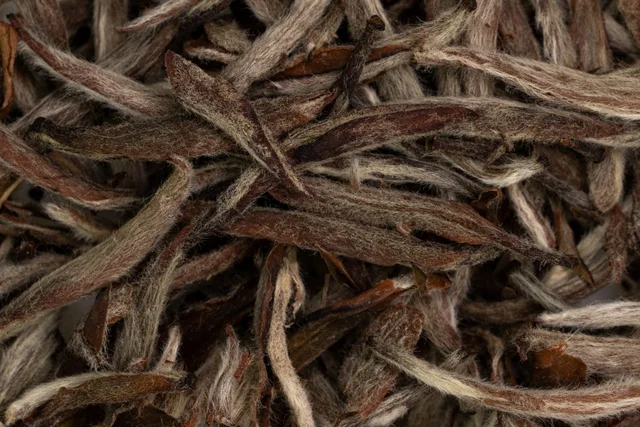
Slightly twisted spirals of silvery buds and tender young leaves; color — greenish-silver, with abundant white down.
Dry Leaf Aroma
Fresh, with notes of meadow grasses, hay, wet stones and light floral undertone reminiscent of jasmine.
Liquor Aroma
Delicate, fresh, floral-grassy with a "warm" sweet base.
Liquor Color
Very light, pale amber with greenish tinge; clear.
Spent Leaves
Tender, whole buds and young leaves — light green, resilient, uniform in fraction.
Taste
Soft, sweetish; dominated by tropical fruit notes (mango), light acidity (sea buckthorn) and refreshing grassy finish. Body — silky, "enveloping", without coarse astri...
Details
Raw Material
Whole, resilient buds and leaves without damage; uniform silvery down; absence of "yellow" aging; immediate delivery to production to prevent uncontrolled oxidation.
Amino Acids
Elevated content of L-theanine (about 2%), significantly higher than most green teas. It is precisely theanine that is responsible for the characteristic sweetness (umami) and r...
Minerals
Set typical for red-yellow ferrallitic soils of Guangxi: potassium, calcium, magnesium, manganese.
Polyphenols
High content of catechins (up to 18%), of which the main one is epigallocatechin gallate (EGCG, about 12% of dry mass) — one of the most active natural antioxidants.
Vitamins
C, E, B group; high-altitude origin promotes preservation of thermolabile vitamin C.
Early harvest months
3, 4
FAQ

Questions & answers

No published questions and answers yet.

Customer reviews

No reviews yet. Be the first to share your experience.

Write a review

Sign in to check whether this purchase is eligible for a review.

Where to buy

Buy this tea

Verified sellers and regional availability are resolved from the commerce network before any external seller page opens.

Seller trust: Only verified commerce-network records are shown; retailer identity, terms and freshness remain visible before you follow a route.

Verified offers are being prepared

Region coverage: China, Guǎngxī Zhuāng Autonomous Region (广西壮族自治区, Guǎngxī Zhuàngzú Zìzhìqū), Bǎisè region (百色, Bǎisè)

No verified public offer is available for this product yet. Add the tea to your request or check again after the retailer network sync.

Open the shop

Continue the research

From the tea journal

zunyi hongcha

cultivar: Predominantly medium- and small-leaf cultivars are used, developed at the Guìzhōu Tea Research Institute (贵州省茶叶研究所) based on Meitan Experimental Station. Main varieties: Qianmei 601 (黔湄601, Qiánméi 601) — asexual clone, small tree with large leaf, developed by crossing Zhènníng Tuanyecha (镇宁团叶茶, maternal plant) and Fèngqìng Dàyè Chá (凤庆大叶茶, paternal plant), registered as national variety in 1994 (GS13013-1994); Qianmei 419 (黔湄419); Qianmei 502 (黔湄502); Méitán Táichá (湄潭苔茶, Méitán Tá...

Read article

ziyang mao jian

cultivar: The main cultivar is the Zǐyáng Group Cultivar (紫阳群体种, Zǐyáng qúntǐ zhǒng), recognized as a nationally recommended local variety (国家级地方良种). Belongs to the bush type (Camellia sinensis var. sinensis) with elliptical or lanceolate leaves. Distinguished by early bud awakening, dense branching, high resistance to adverse conditions and good productivity. Chemical profile of fresh leaf: polyphenols — 30.35%, amino acids — 3.08%, selenium — average 0.6530 mg/kg (maximum — up to 3.8536 mg/...

Read article
Open the journal