
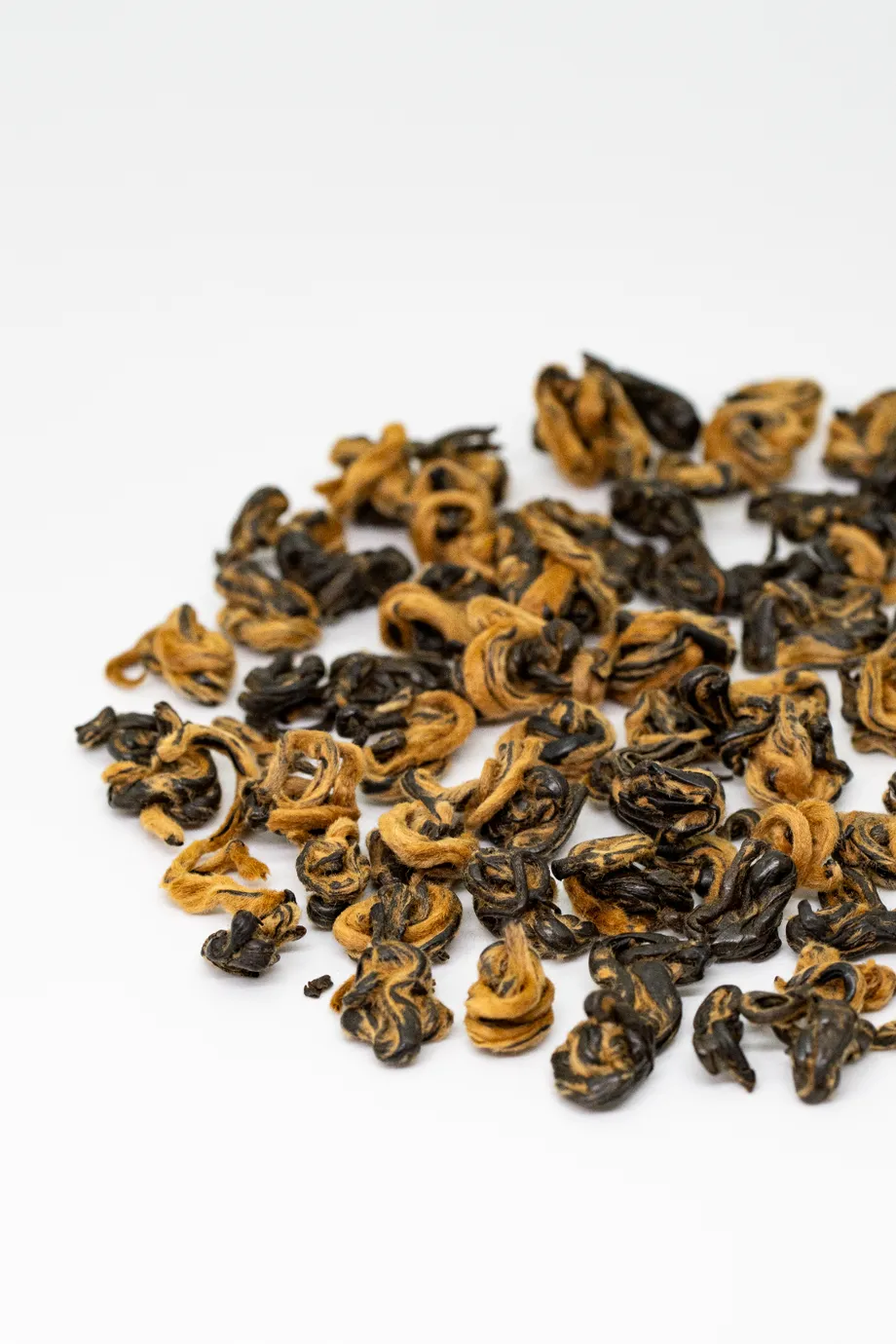


Biluohong Chá碧螺红茶
bìluó hóngchá
- Origin
- China, Jiāngsū Province (江苏, Jiāngsū), Sūzhōu City (苏州市, Sūzhōu shì),...
- Tea type
- Gaiwan
- Water temperature
- 90 °C
- Gongfu water temperature
- 93 °C
Provenance and specifications
- Origin
- China, Jiāngsū Province (江苏, Jiāngsū), Sūzhōu City (苏州市, Sūzhōu shì), Wúzhōng District (吴中区, Wúzhōng qū); Dongting Mountains — Dōngshān Peninsula (洞庭东山, Dòngtíng Dōngshān) and Xīshān Island (洞庭西山, Dòngtíng Xīshān) on Lake Tàihú (太湖, Tàihú)
- Tea type
- Gaiwan
- SKU
- BILUO-HONGCHA-CN
Brewing recipes
- Gongfu: 93°C, 5 g / 100 ml, 10s, 4 steeps
- Western: 88°C, 3 g / 200 ml, 180s, 2 steeps
Brewing, origin and taste notes
Brewing
- Tea amount
- 4–5 g per 100–120 ml (gongfu method); 3–4 g per 200 ml (brewing in cup/bowl).
- Teaware
- Porcelain gàiwǎn (盖碗, gàiwǎn) — universal choice; porcelain teapot; Yíxīng teapot (宜兴紫砂壶) — if you prefer a rounder, more "velvety" profile.
- Water temperature
- 90 °C
- Gongfu water temperature
- 93 °C
- Tea amount
- 5 g
- Gongfu water volume
- 100 ml
Origin
- Tea type
- Red
- Soil
- Yellow-brown forest soils and red-yellow lateritic soils (红黄壤, hónghuáng rǎng), acidity pH 4.5–6.0; rich in organic matter and phosphorus due to centuries of fruit lea...
Taste
- Dry Leaf Appearance
- Thin, tightly twisted "spirals" 1–2 cm long; color from dark chestnut to black with a scattering of golden tips (金毫, jīnháo). Highest grades show abundant down an...
- Dry Leaf Aroma
- Bright, sweet, with distinct notes of honey, dried apricot, and warm caramel; in the background — light floral trail inherited from proximity to fruit trees.
- Liquor Aroma
- Multi-layered: in first steeps — honey, lychee, ripe apricot; as it develops, notes of roasted chestnut, bread crust, and light cocoa appear. Characteristic "fruity florali...
- Liquor Color
- Red-amber, clear and bright, with pronounced "golden ring" (金圈, jīnquān) around the cup edge — a sign of high theaflavin content.
- Spent Leaves
- Leaves unfold elastically and evenly; shades from copper-red to chestnut; in good batches the leaf is whole, with visible veins, without signs of burning.
- Sensory Source Descriptor Be Intensity
- 3
Details
- Alkaloids
- Caffeine (~2.5–4.0% dry weight), theobromine, theophylline. The synergy of caffeine and L-theanine provides gentle, focused alertness without "spikes" and subsequent c...
- Amino Acids
- L-theanine is the key amino acid providing softness, sweetness, and relaxing effect. Thanks to the small-leaf variety and foggy microclimate of Taihu, amino acid content in Dong...
- Minerals
- Potassium, magnesium, manganese, zinc, fluorine, phosphorus — due to the richness of Dongting soils.
- Vitamins
- Trace amounts of B vitamins (B₁, B₂, B₆), vitamin E; vitamin C is partially destroyed during oxidation (unlike green tea, where its preservation is maximal).
- Early harvest months
- 3, 4
- Late harvest months
- 5, 6
Questions & answers
No published questions and answers yet.
Customer reviews
No reviews yet. Be the first to share your experience.
Write a review
Sign in to check whether this purchase is eligible for a review.
Buy this tea
Verified sellers and regional availability are resolved from the commerce network before any external seller page opens.
Seller trust: Only verified commerce-network records are shown; retailer identity, terms and freshness remain visible before you follow a route.
Verified offers are being prepared
Region coverage: China, Jiāngsū Province (江苏, Jiāngsū), Sūzhōu City (苏州市, Sūzhōu shì), Wúzhōng District (吴中区, Wúzhōng qū); Dongting Mountains — Dōngshān Peninsula (洞庭东山, Dòngtíng Dōngshān) and Xīshān Island (洞庭西山, Dòngtíng Xīshān) on Lake Tàihú (太湖, Tàihú)
No verified public offer is available for this product yet. Add the tea to your request or check again after the retailer network sync.
Open the shop