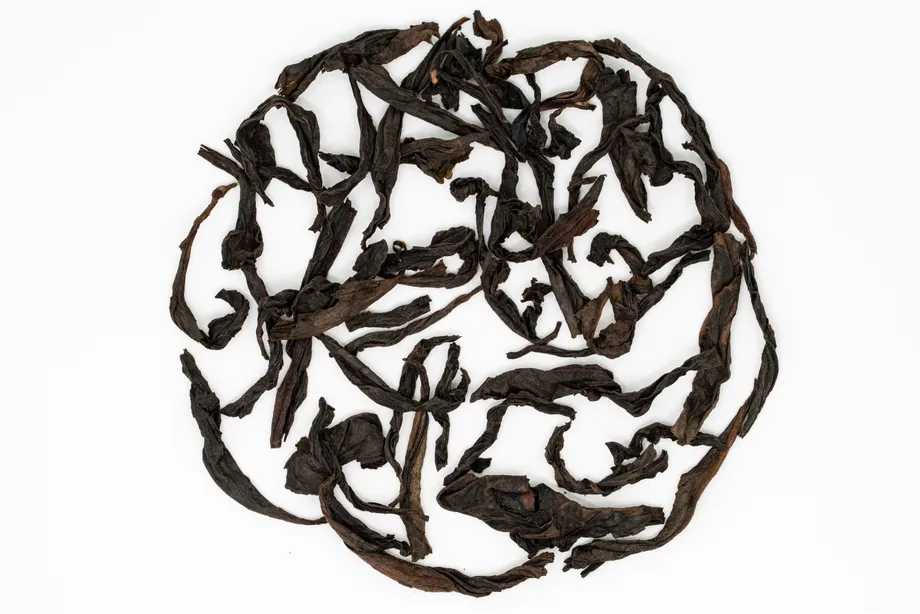
Studio preview
Dà Hóng Páo
Gaiwan
Dà Hóng Páo大红袍
dà hóng páo
- Origin
- China, Fújiàn Province (福建, Fújiàn), Wǔyí Mountains (武夷山, Wǔyí Shān),...
- Tea type
- Oolong Tea
- Water temperature
- 90 °C
- Gongfu water temperature
- 98 °C
SKU · DA-HONG-PAO-CN
Tea dossier
Provenance and specifications
- Origin
- China, Fújiàn Province (福建, Fújiàn), Wǔyí Mountains (武夷山, Wǔyí Shān), UNESCO-protected reserve
- Tea type
- Gaiwan
- SKU
- DA-HONG-PAO-CN
Brewing recipes
- Gongfu: 98°C, 7 g / 100 ml, 10s, 10 steeps
- Western: 95°C, 3 g / 200 ml, 180s, 2 steeps
Tea dossier
Brewing, origin and taste notes
Brewing
- Tea amount
- 5-7 grams per 150-200 ml of water (approximately one to one and a half teaspoons).
- Water temperature
- 90 °C
- Gongfu water temperature
- 98 °C
- Tea amount
- 7 g
- Gongfu water volume
- 100 ml
- Tea-to-water ratio
- 10 s
Origin
- Tea type
- Oolong
- Climate
- Subtropical monsoon, with warm winters and hot summers. High humidity, abundant precipitation, frequent mists that shelter tea bushes from scorching sun and promote accumulation...
Taste
- Dry Leaf Appearance
- Large, longitudinally twisted leaves, dark brown, almost black in color, with reddish or golden luster. Leaves are dense, strong, oily in appearance.
- Dry Leaf Aroma
- Very rich, multifaceted, with pronounced notes of "fire" (roasting), woody, spicy, chocolate, caramel, fruity (dried fruits) and floral nuances. The characteristic &qu...
- Liquor Aroma
- Deep, enveloping, with dominating notes of roasting, dried fruits, chocolate, caramel, spices, with floral and mineral undertones.
- Liquor Color
- From dark amber to reddish-brown, cognac-colored, transparent, clear, with oily sheen.
- Spent Leaves
- Whole, dense, elastic leaves of dark brown color with reddish tint, unfurling during brewing.
- Sensory Source Descriptor Ch Intensity
- 1
Details
- Cultivar
- The question of Da Hong Pao's varietal classification is a subject of discussion.
- Picking
- Harvesting occurs, as a rule, in late April - early May.
- Pluck Standard
- Bud and two-three upper leaves are picked.
- Raw Material
- High, only healthy, undamaged leaves are used.
- Cultural Significance
- Da Hong Pao is not just tea, but a cultural phenomenon, a symbol of China and, in particular, the Wuyi Mountains. It is the standard of rock oolongs, a model for emulation and a...
- History
- The history of Da Hong Pao spans more than 360 years, beginning from the mid-17th century (end of Ming dynasty - beginning of Qing dynasty).
FAQ
Questions & answers
No published questions and answers yet.
Customer reviews
No reviews yet. Be the first to share your experience.
Write a review
Sign in to check whether this purchase is eligible for a review.
Where to buy
Buy this tea
Verified sellers and regional availability are resolved from the commerce network before any external seller page opens.
Seller trust: Only verified commerce-network records are shown; retailer identity, terms and freshness remain visible before you follow a route.
Verified offers are being prepared
Region coverage: China, Fújiàn Province (福建, Fújiàn), Wǔyí Mountains (武夷山, Wǔyí Shān), UNESCO-protected reserve
No verified public offer is available for this product yet. Add the tea to your request or check again after the retailer network sync.
Open the shopMore to explore


